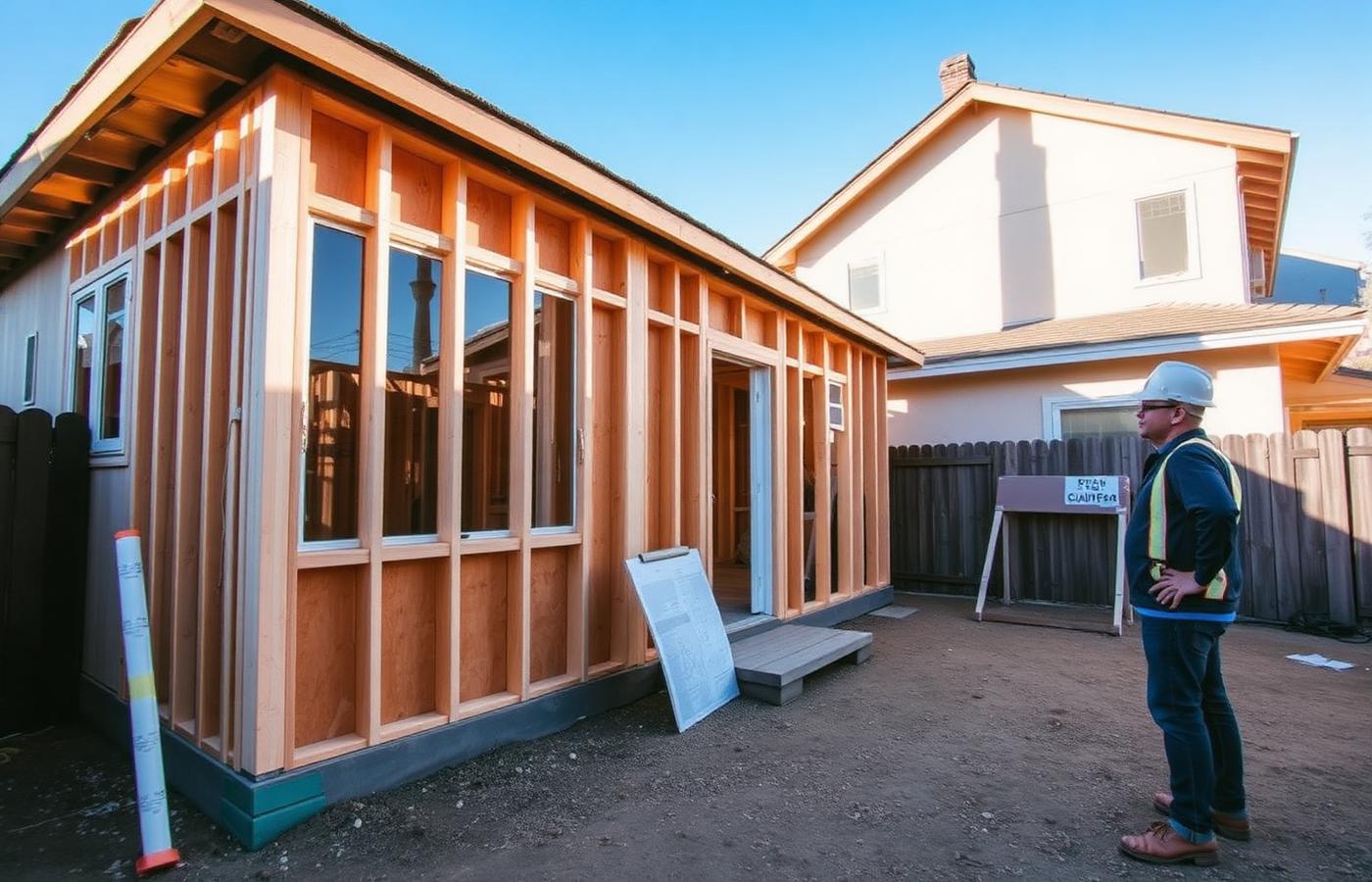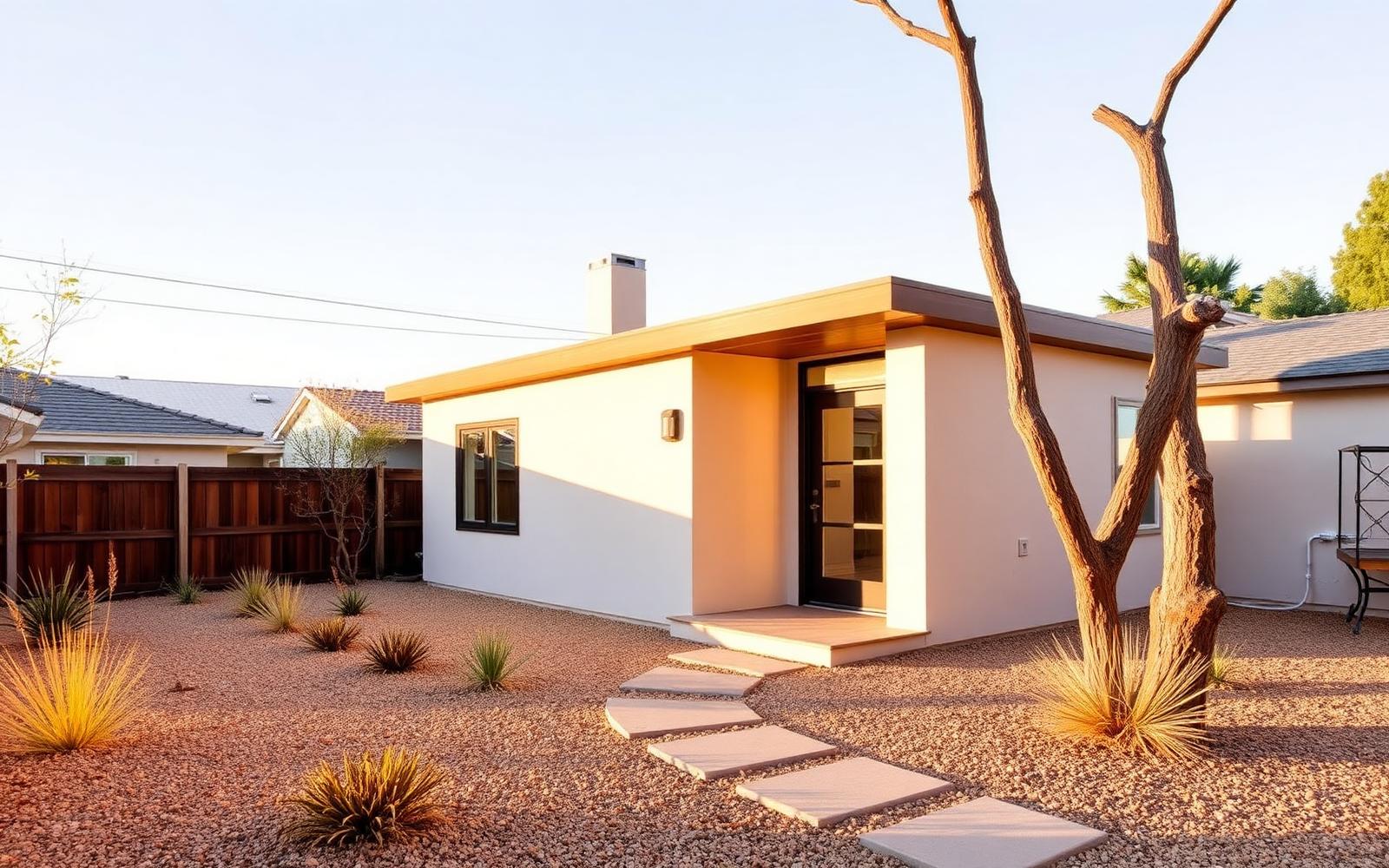
Of every way to add a rental unit in Southern California, converting an existing garage is usually the fastest and least expensive. The structure is already standing, the foundation is poured, and California law has moved decisively in the homeowner's favor.
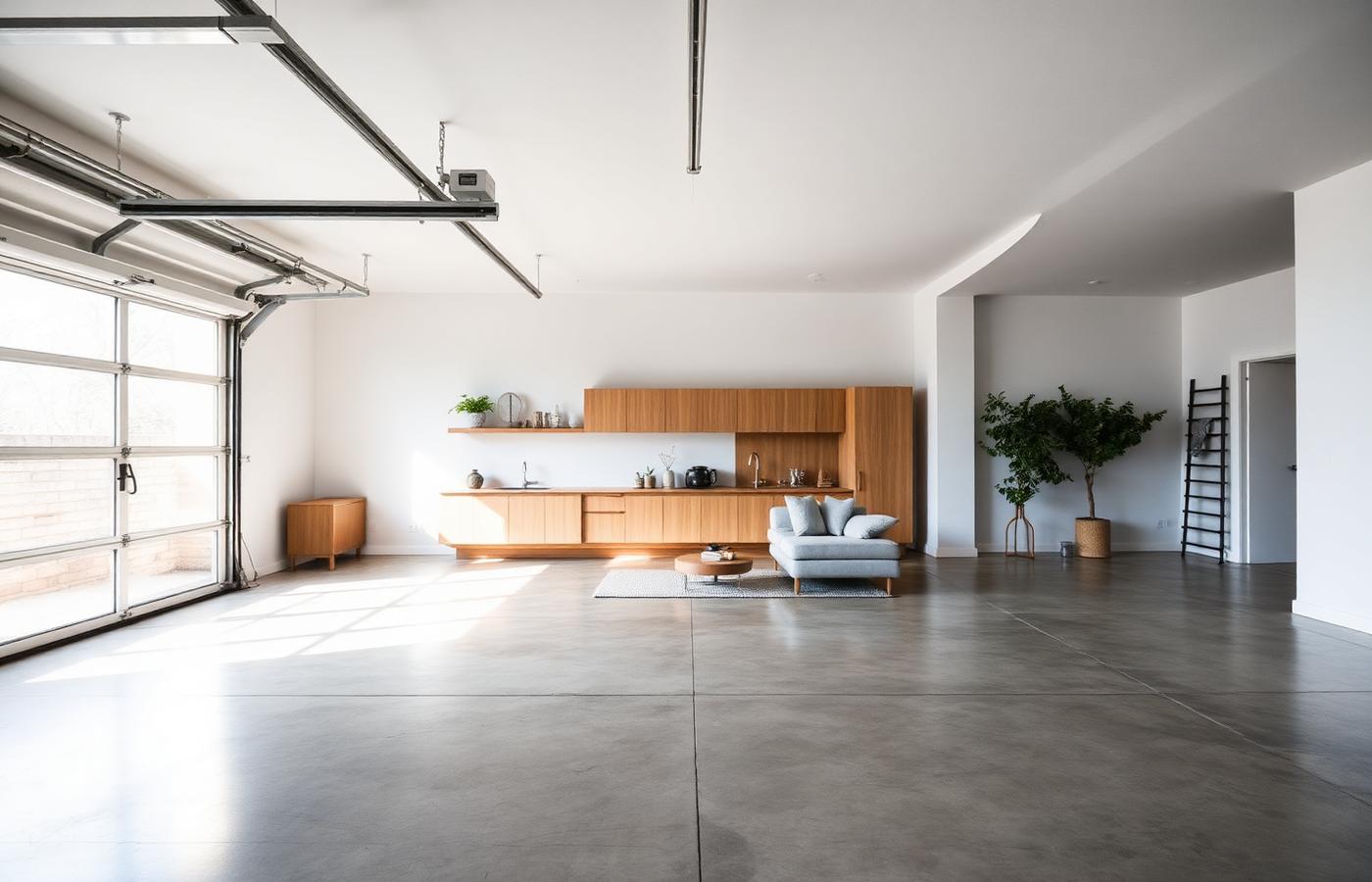
Where the money actually goes
Owners are often surprised that the cost is not in the walls. It is in everything a garage was never built to have:
- Plumbing. A kitchen and bathroom mean new supply and waste lines, often trenched to the main.
- Electrical. Dedicated circuits, sometimes a panel upgrade, and code-required outlets and lighting.
- Insulation and drywall. Garages are uninsulated; Title 24 compliance is not optional.
- Egress and windows. Habitable rooms need light, ventilation, and a legal exit.
- Flooring, HVAC, finishes. Mini-split systems are common and efficient in this application.
Conversion vs. detached build
The conversion typically costs a little more than half of a comparable detached unit while producing rent that is often only 10% to 20% lower. That is why the return on cost frequently comes out ahead.
The unpermitted trap
Southern California is full of converted garages that were never permitted. They cannot be insured properly, appraisers will not count them, lenders may flag them, and code enforcement can force restoration. If you already have one, legalizing it is often cheaper than owners expect — and it converts a liability into an asset.
What a good bid looks like
Line items, not allowances. A schedule with milestones. A written scope for utilities. Clear language about who pulls permits and who pays plan-check fees. If a bid is one page and one number, it is not a bid — it is a guess you will pay for later.
Request a construction bid and we will walk the garage, confirm feasibility with your city, and give you the real number.