
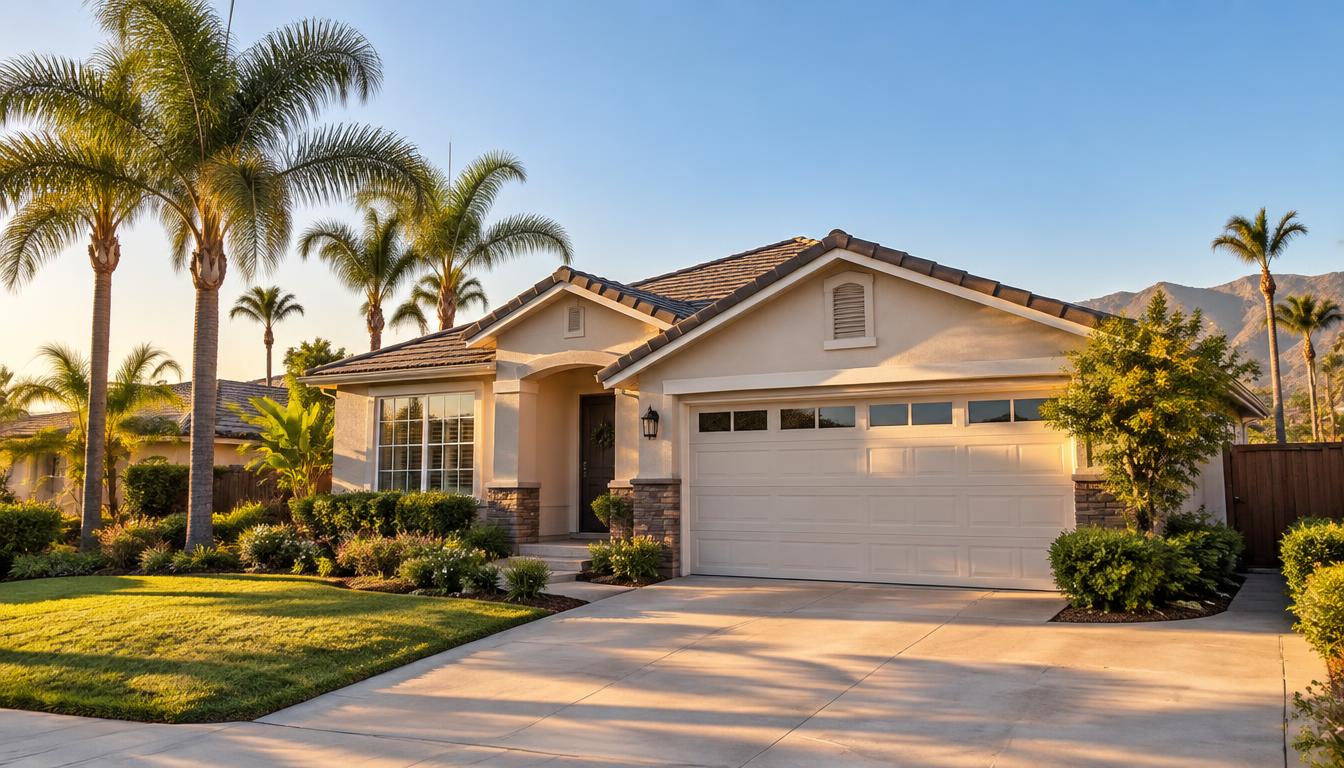
A successful rent pricing strategy for Southern California rentals requires balancing hyper-local market comparisons with statutory cap limits established under California Assembly Bill 1482 (Civil Code Section 1947.12). Property owners must analyze recent local comps, seasonal demand cycles, and property-specific upgrades while ensuring rent increases stay within the statutory limit of 5 percent plus local Consumer Price Index (CPI), capped at 10 percent total for covered properties.
Updated October 13, 2026
Understanding California Rent Caps and Statutory Constraints
Before establishing an asking rent for your property, you must determine whether the unit is subject to statutory rent caps under AB 1482, also known as the California Tenant Protection Act of 2019. Under Civil Code 1947.12, covered properties are limited to an annual rent increase of 5 percent plus the percentage change in the cost of living (CPI) for the region, or 10 percent, whichever is lower. These calculations run over a 12-month period and apply to existing tenants.
Single-family homes and condominiums are generally exempt from state rent caps, provided the property is not owned by a real estate investment trust (REIT), corporation, or limited liability company (LLC) in which at least one member is a corporation. However, to claim this exemption, the landlord must provide a specific written disclosure in the lease agreement signed by the tenant. If this statement is missing from the contract during lease execution, the property automatically loses its statutory exemption and falls under state rent control rules. Vacant units coming onto the market generally allow for market-rate re-leasing (vacancy decontrol), allowing owners to reset the base rent to current market prices upon a vacancy.
The Mathematical Cost of Overpricing Rental Property
Many self-managing landlords fall into the trap of overpricing a home by $100 to $200 above realistic market value, assuming they can simply drop the price later if it does not rent. In Southern California, this approach often leads to extended vacancy periods that eliminate any hypothetical upside.
Consider a realistic scenario: A single-family home in the Inland Empire has a true market value of $3,000 per month. If the owner lists the property for $3,200 per month and it sits vacant for two months before the price is reduced, the owner loses $6,400 in gross rental revenue. Even if a tenant eventually agrees to pay $3,100 per month, the extra $100 per month yields only $1,200 over a standard 12-month lease. The owner remains $5,200 in the red due to initial vacancy loss. Pricing accurately from day one achieves full occupancy faster and produces higher annualized cash flow.
Step-by-Step Data-Driven Pricing Framework
To establish an optimal listing price, property owners should follow a systematic valuation framework rather than relying on automated internet estimate algorithms, which frequently miss critical micro-market nuances.
1. Select True Direct Comparables
Gather data on 3 to 5 comparable properties (comps) within a 1-mile radius that have been leased within the past 60 to 90 days. Focus on active listings to gauge current competition, but rely primarily on verified closed transactions to understand what renters actually paid. Ensure comps share key features: square footage within 15 percent, matching bedroom and bathroom counts, and similar lot configurations.
2. Adjust for Amenities and Property Condition
Adjust your target price up or down based on high-impact amenities. Features that consistently command premium rent in Southern California markets include central air conditioning, updated kitchen appliances, in-unit laundry hookups or washers/dryers, attached garages, and private outdoor space. A home without central HVAC in hot summer regions like the High Desert or Coachella Valley will struggle to attract tenants at top-tier rates.
3. Factor in Regional Demand and Seasonality
Rental demand in Southern California fluctuates predictably throughout the year. Peak rental season runs from May through August, when families prefer to move before the start of the school year. During these months, inventory turns quickly and pricing leverage rests with the owner. Conversely, November through January experiences lower tenant activity. Setting asking prices slightly more aggressively in summer and competitively in late autumn minimizes downtime.
Regional Micro-Market Variations Across Southern California
Rental rates vary significantly depending on the broader region. Successful pricing strategies account for local economic drivers across our core service areas:
- San Gabriel Valley: Strong demand near high-performing school districts and transportation corridors often supports higher price-per-square-foot valuations for single-family homes and updated condos.
- Inland Empire and Riverside County: Large suburban single-family homes draw families seeking space. Logistics industry expansion drives steady tenant pools, making competitive pricing key to securing long-term occupants.
- Coachella Valley: Seasonal shifts are pronounced. Long-term residential rentals require careful pricing during shoulder seasons to ensure continuous annual cash flow.
- High Desert: Affordability drives this market. Pricing must align tightly with local wage metrics to ensure low turnover and reliable monthly collections.
- Los Angeles and North Orange County Edge: High density and tight supply demand precise neighborhood-level comps, as prices can shift dramatically within just a few blocks.
Accelerating Cash Flow with Professional Management
Setting the right price is only one part of maximizing your rental income. Efficient tenant screening, rapid turnover coordination, and proper lease execution prevent revenue leaks over time. At Bright Path Property Management, we help rental owners maximize investment performance without charging high percentage-based management fees.
Unlike traditional management companies that charge 8 to 10 percent of your monthly rent, Bright Path Property Management offers flat-fee pricing options: Standard at $99 per month, Plus at $199 per month (includes landlord protection and tax document preparation), and Shield at $249 per month (adds quarterly property inspections). For owners who prefer to handle day-to-day tasks themselves but need professional marketing and valuation, our dedicated tenant placement service is available for a one-time fee of $1,200. When turnover occurs, our Rent Ready turnover coordination service handles repairs for $299 per turnover.
To explore how a flat-fee model can keep more rental revenue in your pocket while maintaining accurate market pricing, review our full line of property management services or talk to our team today for a free rental price analysis.
This is general information, not legal or tax advice.