Managing multi-family assets in West Covina, California requires balancing complex state housing regulations with local market demands. Located along the busy Interstate 10 corridor in the heart of the San Gabriel Valley, West Covina features a diverse mix of duplexes, triplexes, medium-sized apartment communities, and larger residential complexes. Professional multi family property management in West Covina, CA ensures your property remains compliant with California statutory requirements, maintains strong occupancy rates, and steadily enhances your Net Operating Income (NOI).
Navigating California Rent Laws and AB 1482 in West Covina
Multi-family property owners in West Covina must strictly adhere to the California Tenant Protection Act of 2019 (Assembly Bill 1482) and subsequent updates like Senate Bill 567. Unless a property meets specific exemption criteria—such as units built within the last 15 years on a rolling basis—multi-family buildings are subject to state-mandated rent caps and just-cause eviction standards.
Under AB 1482, annual rent increases are capped at 5% plus the local Consumer Price Index (CPI) for the Los Angeles-Long Beach-Anaheim region, with an absolute maximum ceiling of 10%. In addition, after a tenant has continuously occupied a unit for 12 months (or 24 months if multiple tenants have joined at different times), termination of tenancy requires documented just-cause. No-fault terminations, such as substantial remodels or owner move-ins under SB 567, trigger strict notification timelines and mandatory relocation assistance equal to one month's rent. Professional asset oversight ensures all notice periods, lease disclosures, and annual adjustments comply precisely with state laws to prevent costly legal penalties.
Targeted Tenant Screening and Leasing in the San Gabriel Valley
West Covina attracts a steady demographic of renters due to its proximity to major employment hubs in Los Angeles, Pasadena, and the Inland Empire, as well as higher education institutions like Mt. San Antonio College and Cal Poly Pomona. However, placing qualified tenants across a multi-family building requires structured, legal, and thorough screening procedures.
- Income Verification: Setting clear qualification thresholds, such as requiring gross monthly income equal to 2.5 to 3 times the monthly rent. Under California Senate Bill 267, landlord screening policies must allow alternative evidence of financial reliability for applicants utilizing housing vouchers.
- Credit and Background Checks: Evaluating credit reports for historical payment reliability, active bankruptcies, or outstanding landlord judgments while remaining fully compliant with California Fair Employment and Housing Act (FEHA) guidelines.
- Verifiable Rental History: Contacting previous housing providers to verify timely payments, lease compliance, and proper notice execution.
By executing standardized screening workflows, multi-family operators minimize tenant turnover, preserve quiet enjoyment across multi-unit communities, and protect overall cash flow.
Proactive Maintenance and Vendor Oversight for Apartment Complexes
Multi-family properties built during the expansion eras of the 1960s through 1980s across West Covina neighborhoods—such as South Hills, Woodside, and central residential corridors near Azusa Avenue and Sunset Avenue—require diligent operational upkeep. Delaying routine repairs in multi-unit buildings often leads to compounded structural damage, elevated utility costs, and increased tenant friction.
A robust preventative maintenance program for multi-family real estate includes:
- HVAC and Mechanical Servicing: Inspecting and servicing centralized heating and air conditioning units twice annually to prevent emergency breakdowns during summer heat waves in the San Gabriel Valley.
- Plumbing Mainline Maintenance: Hydro-jetting main sewer lines and inspecting shared plumbing stacks periodically to prevent multi-unit backups.
- Roofing and Envelope Inspections: Checking flat and pitched roofs prior to winter rain seasons to address flashings, drains, and tile integrity before leaks damage unit interiors.
- Fast Turnaround Times: Streamlining paint, flooring, and hardware upgrades during unit turnovers to reduce vacancy windows to 14 days or fewer.
Working with reliable local contractors who hold appropriate license and insurance coverage ensures repairs meet City of West Covina municipal codes while keeping capital expenditures reasonable.
Financial Reporting and Lease Execution
Managing multiple units under one roof demands clean accounting and structured administration. Property owners need real-time line-item clarity on rental collections, operating expenses, capital reserves, and utility bill-backs (RUBS). Utilizing dedicated cloud portals allows tenants to set up automatic electronic payments, decreasing late payments and eliminating manual check processing.
Proper initial Lease Execution sets clear boundaries for community living. Custom lease agreements specify rules regarding parking assignments, pet policies, guest stays, shared amenity use, and noise curfews. Enforcing these terms consistently protects resident safety and maintains asset value across the entire property.
Maximizing Multi-Family Asset Performance in West Covina
Successfully managing multi-family real estate is an ongoing balancing act between expense control and revenue optimization. By strategically reviewing market rents along West Covina Parkway, Amar Road, and nearby regional arteries, property managers can implement lawful, incremental rent adjustments that mirror localized market appreciation without triggering unnecessary turnover.
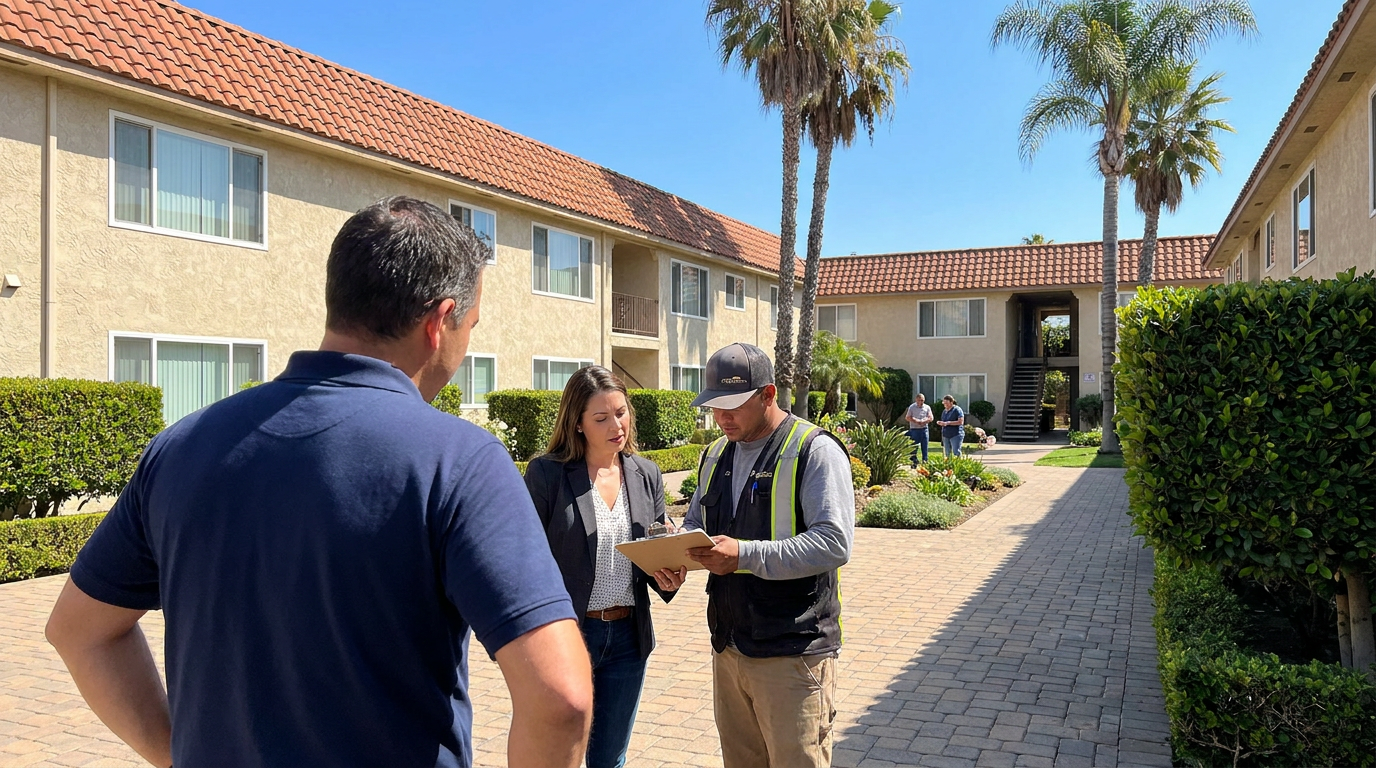
Partnering with an experienced local firm provides the boots-on-the-ground presence necessary to conduct regular property inspections, address tenant inquiries promptly, and preserve long-term equity. Explore how our comprehensive property management services can stabilize your multi-family portfolio, or talk to our team to evaluate your building's performance today.
Disclaimer: The information provided in this article is for general informational and educational purposes only and does not constitute legal, tax, or financial advice. Housing laws in California change frequently. Property owners should consult a licensed California attorney or certified professional for specific legal guidance regarding real estate management and statutory compliance.