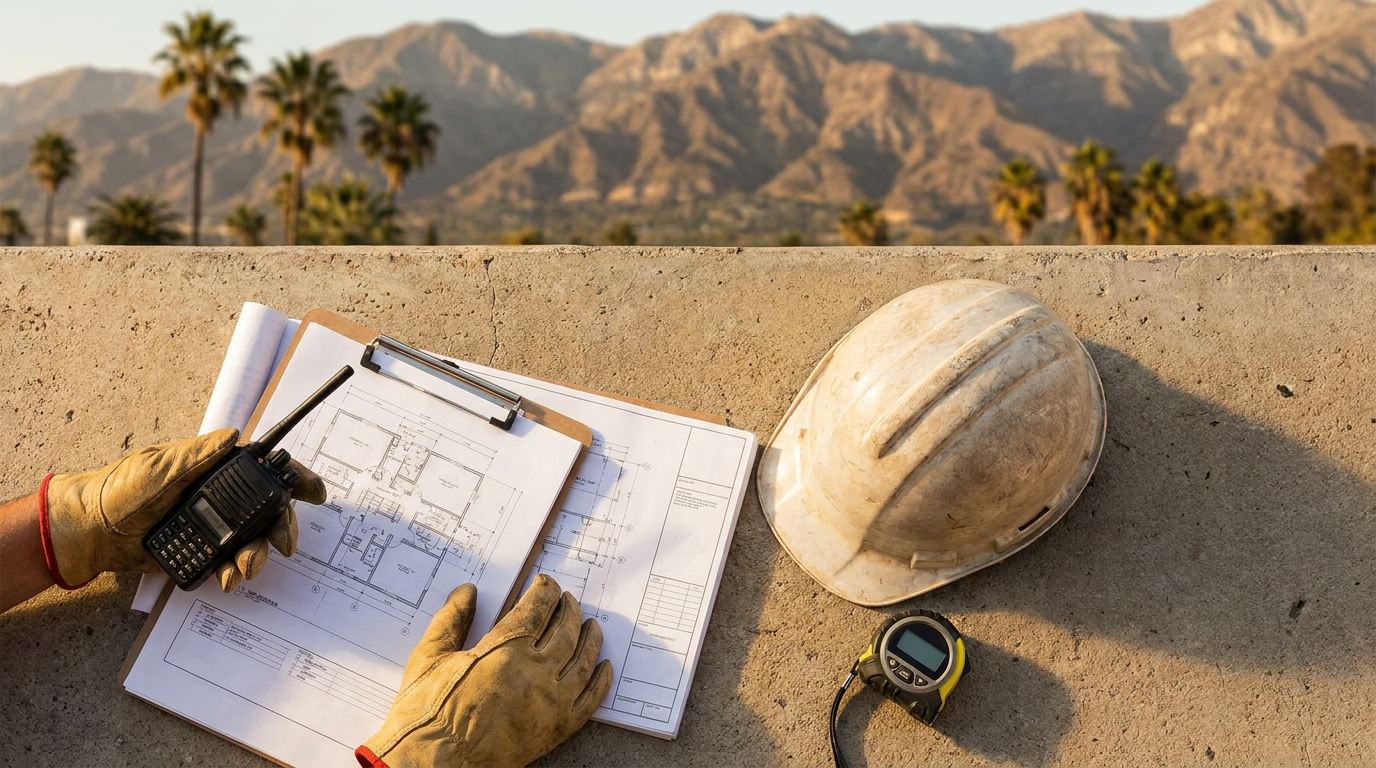
Managing logistics hubs, flex spaces, and warehouse facilities in Southern California requires precise operational oversight and local regulatory expertise. Professional industrial property management in the Inland Empire protects high-value commercial assets across major freight corridors like the I-10, I-15, SR-60, and CA-210. From Triple Net (NNN) lease administration to complex environmental compliance, expert property management ensures continuous rental cash flow while preserving structural value.
The Inland Empire Industrial Market Landscape
The Inland Empire remains one of North America's premier industrial and logistics markets. Anchored by major submarkets such as Ontario, Rancho Cucamonga, Fontana, Chino, Riverside, and San Bernardino, the region serves as the primary distribution nexus for goods entering through the Ports of Los Angeles and Long Beach. Commercial real estate investors in the IE oversee diverse industrial assets, including big-box logistics centers exceeding 500,000 square feet, multi-tenant industrial parks, light manufacturing flex buildings, and low-coverage yard facilities used for equipment or trailer storage.
While demand for warehouse space remains structurally resilient, operating an industrial property in Southern California involves distinct modern challenges. High-axle truck traffic accelerates wear on asphalt and concrete aprons, specialized fire suppression systems require rigid testing, and local regulations place increasing burdens on warehouse operators and property owners. Managing these variables effectively requires specialized oversight tailored specifically to commercial and industrial asset classes.
Core Responsibilities of Industrial Property Management
Commercial industrial management differs significantly from residential or standard retail operations. The focus centers on facility durability, tenant compliance, and meticulous financial administration.
1. Triple Net (NNN) Lease & CAM Administration
Most industrial properties operate under Triple Net (NNN) lease structures, where tenants pay base rent plus their proportionate share of property taxes, building insurance, and Common Area Maintenance (CAM) expenses. Effective management requires detailed financial record-keeping to perform annual CAM reconciliations accurately. Property managers track real estate tax assessments, master insurance policy premiums, landscape maintenance, routine roof inspections, parking lot sweeping, and exterior lighting utilities. Clear, transparent CAM auditing prevents billing disputes and keeps industrial tenants compliant with lease execution terms.
2. High-Impact Facility Maintenance
Industrial assets endure heavy physical wear and tear. A proactive maintenance schedule protects capital investment and minimizes costly emergency capital expenditures. Key physical maintenance oversight includes:
- Roofing Systems: Regular inspections of TPO, PVC, and built-up roof membranes, ensuring skylights are safe and drains remain clear of debris before heavy winter rains.
- Dock Equipment & Roll-Up Doors: Maintaining motorized overhead dock doors, mechanical edge-of-dock levelers, hydraulic pit levelers, and vehicle restraints.
- Paving & Concrete Aprons: Repairing asphalt cracking, sealcoating, and addressing concrete slab settlement near loading docks caused by heavy semi-truck axle weights.
- Fire Suppression Systems: Coordinating annual inspections for Early Suppression Fast Response (ESFR) sprinkler systems, fire pumps, backflow preventers, and central alarm monitoring.
- High-Bay Lighting & Electrical infrastructure: Managing LED retrofits, transformer upkeep, and heavy power allocations (e.g., 2,000 to 4,000-amp, 480V 3-phase systems) required by modern manufacturing or cold storage tenants.
Navigating Environmental & Local Regulatory Compliance
Industrial property owners in Riverside and San Bernardino counties face strict regional regulations that require ongoing oversight to avoid severe financial penalties.
South Coast AQMD Rule 2305 (WAIRE Program)
The South Coast Air Quality Management District (SCAQMD) enforced Rule 2305, known as the Warehouse Actions and Investments to Reduce Emissions (WAIRE) Program. This indirect source rule applies to commercial warehouse buildings within the South Coast AQMD jurisdiction with an indoor floor space of 100,000 square feet or greater used for warehousing activities. Property owners and warehouse operators must earn annual WAIRE points by completing zero-emission or low-emission actions (such as installing solar power, installing EV charging stations for yard hostlers or trucks, or hosting zero-emission truck trips) or pay a compliance fee. A qualified industrial property manager tracks facility usage, assists tenants with reporting obligations, and coordinates energy efficiency upgrades to maintain compliance.
Stormwater & Hazardous Materials Oversight
Industrial sites must adhere to the California State Water Resources Control Board General Industrial Stormwater Permit requirements. Managers ensure properties maintain compliant Industrial General Permits (IGP), keep Stormwater Pollution Prevention Plans (SWPPP) updated, and inspect structural Best Management Practices (BMPs) like oil/water separators and catch basin inserts. Additionally, properties housing manufacturing tenants dealing with hazardous materials require monitoring for local Certified Unified Program Agency (CUPA) permits and hazardous waste storage regulations.
Lease Execution and Industrial Tenant Retention
Securing high-credit corporate tenants is only the first step; retaining them through proactive service is essential for maximizing long-term yields. Industrial lease execution requires monitoring localized use permissions, zoning constraints, clear height requirements, and parking ratios (including staging spaces for heavy trucks). When maintenance requests occur—such as a broken dock leveler halting distribution operations—rapid response times prevent operational downtime for the tenant and protect the landlord-tenant relationship.
Partnering with a dedicated regional team ensures that rent collections, insurance certificate tracking (COI verification), and annual CPI rent adjustments are handled systematically without friction. Investors interested in scaling their Southern California commercial portfolio can explore comprehensive property management services designed to streamline operations across the SGV and Inland Empire markets.
Why Local Expertise Matters in the Inland Empire
Managing industrial assets from a distance can lead to overlooked maintenance, uncollected pass-through expenses, and costly compliance gaps. Having a local presence grounded in Covina and operating throughout Ontario, Rancho Cucamonga, Fontana, and Riverside provides immediate access to trusted commercial vendors, emergency response teams, and municipal building departments.
Whether you own a single multi-tenant light industrial park in Upland or a distribution building in Riverside, working with experienced professionals ensures your asset remains competitive, compliant, and profitable. If you are ready to enhance your asset management strategy, talk to our team today to discuss tailored management solutions for your commercial portfolio.
Disclaimer: The information provided in this article is for general informational purposes only and does not constitute legal, tax, or professional financial advice. Property owners should consult with qualified legal counsel, tax professionals, and environmental engineers regarding specific compliance obligations under local, state, and federal laws.