
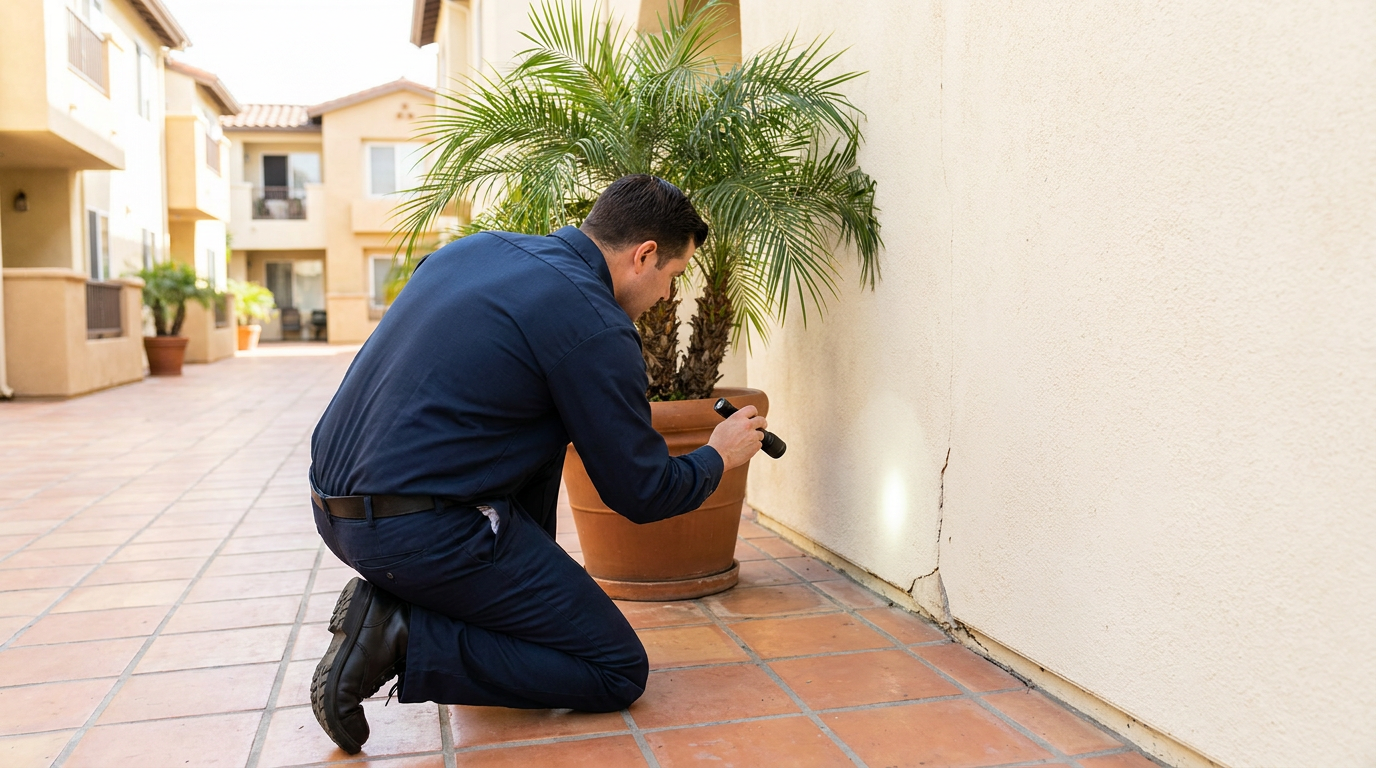
Under California law, landlords are fundamentally responsible for ensuring rental properties remain free from vermin, rodents, and insects under the Implied Warranty of Habitability (Civil Code Section 1941.1). However, the legal responsibility for pest control is not entirely one-sided. If an infestation is directly caused by a tenant's poor sanitation, unauthorized pets, or failure to report issues promptly, financial responsibility can shift back to the occupant under Civil Code Section 1941.2. Navigating these boundaries requires a clear understanding of state statutes, mandatory disclosures, and localized vector rules across the San Gabriel Valley, Inland Empire, and Coachella Valley.
The Implied Warranty of Habitability and Pest Extermination
California Civil Code Section 1941.1 mandates that a dwelling is considered untenantable (uninhabitable) if it lacks effective waterproofing or if the building, grounds, and appurtenances are not clean and free from all accumulations of debris, filth, rubbish, garbage, rodents, and vermin at the time the lease begins and throughout the tenancy. This means that as a default standard, property owners must cover the costs of routine pest control and immediate extermination when an outbreak occurs.
In Southern California communities such as Covina, West Covina, and Glendora, warm weather creates ideal conditions for Argentine ants, subterranean termites, cockroaches, and roof rats. Because these pests often invade from outdoor environment structures or municipal sewer lines, courts generally presume the infestation is a structural maintenance issue unless the landlord can prove otherwise through official documentation from a licensed Pest Control Operator (PCO).
When Is the Tenant Responsible for Pest Control?
While landlords bear the primary burden of maintaining habitability, tenants have affirmative duties under California Civil Code Section 1941.2. A tenant is legally obligated to keep their portion of the premises clean and sanitary, dispose of trash properly, and use electrical, plumbing, and gas fixtures appropriately. A landlord may hold a tenant financially liable for pest extermination under the following circumstances:
- Unsanitary Living Conditions: Allowing open food containers, unwashed dishes, or garbage to accumulate, attracting cockroaches, flies, or rodents.
- Pet-Related Flea Infestations: Bringing an unauthorized animal onto the property, or failing to maintain flea treatments for authorized pets, resulting in a flea outbreak in carpets or yards.
- Hoarding or Clutter: Storing excessive cardboard boxes or personal items that block pest control technicians from treating the premises or create breeding grounds for pests.
- Failure to Report: Deliberately hiding a pest issue for months until it spreads to neighboring units in a multi-family building in Pomona or Ontario.
To successfully hold a tenant responsible, property owners must rely on detailed move-in inspection reports, photographic evidence, and written notes from a licensed pest control professional stating that tenant behavior was the direct cause of the infestation.
California Bed Bug Laws (Civil Code Sections 1954.600 - 1954.605)
Bed bugs are handled under specific California statutory requirements enacted under Assembly Bill 559. These rules impose strict procedural duties on residential landlords:
- Prohibition on Showing or Renting: Landlords cannot show, rent, or lease a vacant unit if they know or suspect it has an active bed bug infestation.
- Mandatory Written Notice: Before signing a residential lease, landlords must provide a specific statutory disclosure (Civil Code Section 1954.603) detailing general information about bed bug appearance, behavior, prevention, and the mandatory requirement for tenants to report suspected infestations immediately.
- Duty to Inspect and Treat: Upon receiving written or oral notice from a tenant, the landlord must promptly hire a licensed pest control professional to conduct an inspection and perform necessary treatments.
- Tenant Cooperation: Tenants are legally required to comply with preparation instructions provided by the pest control technician (e.g., laundering bedding, moving furniture, vacating during treatment). Non-cooperation can constitute a material lease violation.
Notice Requirements and Chemical Treatments
When executing pest control treatments in cities like Upland, Rancho Cucamonga, or Riverside, landlords must comply with state entry and notice statutes:
- 24-Hour Notice to Enter: Under Civil Code Section 1954, landlords must give at least 24 hours written notice before entering a unit to conduct pest inspections or spray treatments, specifying a reasonable window during normal business hours.
- Registered Structural Pest Control Notice: Under Business and Professions Code Section 8538 and Civil Code Section 1940.8, if a licensed pest control company applies pesticides under a periodic contract, the landlord must provide all affected tenants with written notice identifying the pests targeted, the pesticides used, active ingredients, and specific safety precautions.
- Fumigation and Displacement: If severe drywood termite or beetle damage requires structural tenting in Palm Springs or surrounding areas, the property becomes uninhabitable during treatment. Landlords must provide adequate advance notice (often 30 days) and either abate the tenant's rent for the days displaced or negotiate temporary accommodation arrangements, depending on lease terms.
Best Practices for Southern California Landlords
Preventing habitability disputes over pest control requires a proactive operational strategy. Property owners should establish regular exterior perimeter treatments for multi-family buildings and single-family rentals. Clear language should be integrated during Lease Execution outlining mandatory tenant reporting timelines for any signs of water leaks or vermin.
Partnering with experienced local property managers ensures your rental business handles vector control compliance, vendor scheduling, and tenant notices smoothly. To streamline your building management and protect your rental yields, explore our comprehensive property management services or talk to our team today.
For personalized guidance on managing your rental properties across the San Gabriel Valley, Inland Empire, or Coachella Valley, call Bright Path Property Management at 800-325-6836.
Disclaimer: This article is intended solely for informational purposes and does not constitute formal legal advice. California real estate and landlord-tenant laws change frequently. Property owners should consult with a qualified real estate attorney or licensed professional regarding specific habitability or legal disputes.